The first systematic monograph in China on natural muon technology, compiled by a team from Lanzhou University, has been officially published
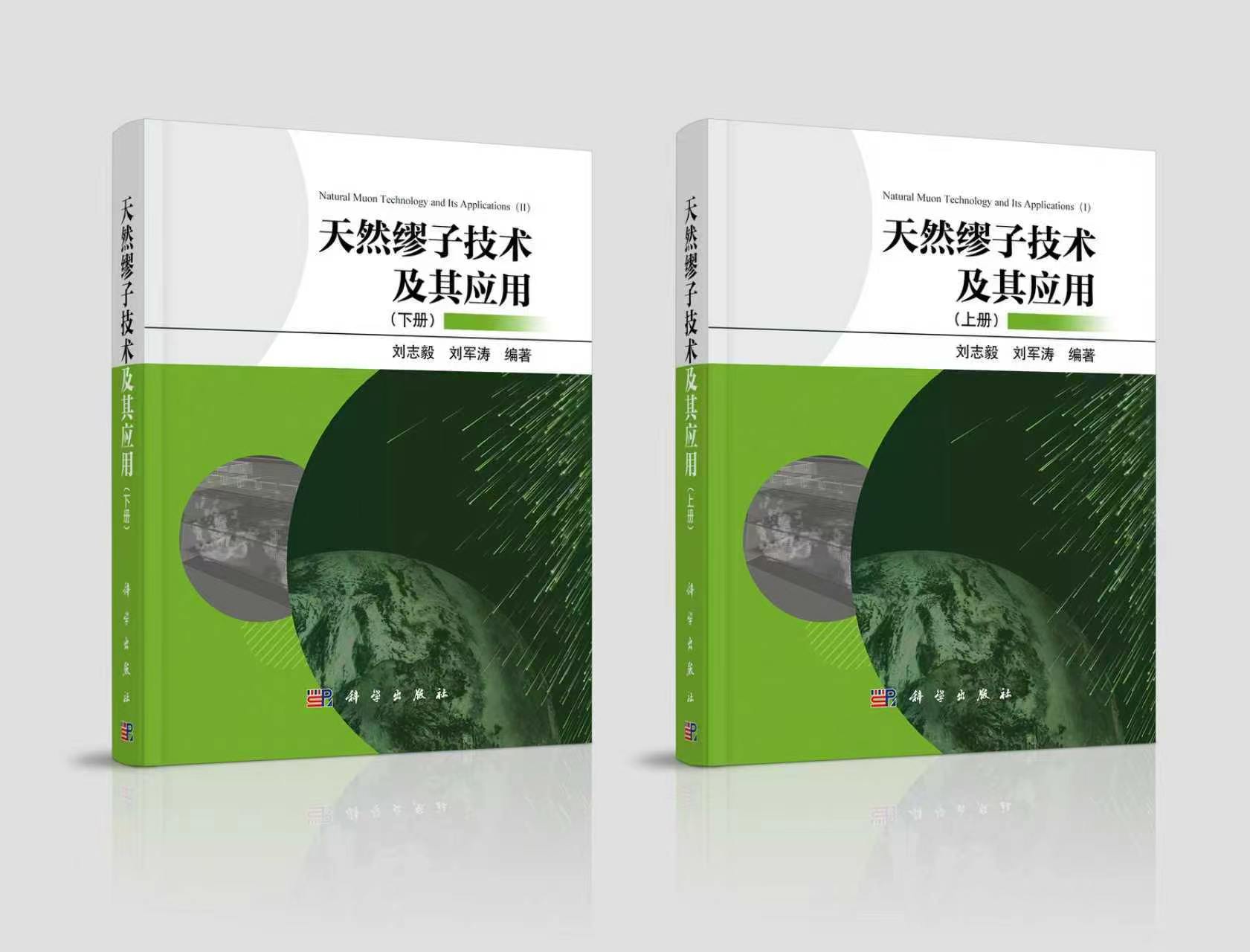
Recently, *Natural Muon Technology and Its Applications* (Volumes 1 and 2), edited by Professor Liu Zhiyi’s team at the Centre for Frontier Science of Rare Isotopes at Lanzhou University, was officially published by Science Press [ISBN: 978-7-03-085430-8 (Volume 1); 978-7-03-085429-2 (Volume 2)]. Comprising four parts and twelve chapters, this book is the first work in China to systematically expound on the fundamental theories and engineering applications of natural muon technology. It fills a gap in the publication of systematic works in this field within the country and reflects the long-standing expertise accumulated by Lanzhou University in the fundamental research, engineering applications and technical system development of natural muon technology. The book was funded by the Lanzhou University Textbook Development Fund and was compiled to meet the needs of teaching, research training and engineering practice in relevant disciplines.
Natural muons are primarily produced when primary cosmic rays enter the atmosphere and interact with atomic nuclei, followed by the decay of secondary particles. By utilising natural muons as a ‘radiation source’, it is possible to perform non-invasive internal imaging of large, dense objects such as mines, tunnels, dams and cultural relics without damaging the target structure. This approach offers unique advantages, including the absence of artificial radiation sources, strong penetrating power, a non-contact method, and suitability for long-term observation.
The book *Natural Muon Technology and Its Applications* is divided into two volumes and systematically covers the physical principles of natural muons, detector development and engineering, data acquisition and forward/inverse algorithms, multi-source fusion methods, as well as case studies of engineering applications in fields such as geological resource exploration, major engineering project safety, border checkpoint surveillance and cultural heritage protection. It serves as a teaching reference for senior undergraduates, postgraduates and researchers in relevant disciplines wishing to systematically study natural muon technology, and also provides guidance for engineering and technical personnel undertaking related applications.
The Natural Muon Imaging Team at the Centre for Frontier Science of Rare Isotopes, Lanzhou University, has long been committed to the development and promotion of natural muon detection systems. The team has independently developed a series of natural muon detection systems and established a comprehensive technical framework encompassing detectors, readout electronics, data acquisition, imaging inversion and three-dimensional visualisation. It has also conducted engineering validation in a range of real-world environments, including mineral exploration sites, underground railway tunnels, earth-and-rock dams, historic city walls and grottoes.
Professor Liu Weiping, an Academician of the Chinese Academy of Sciences and Professor at Southern University of Science and Technology; Professor Hiroyuki Tanaka of the University of Tokyo; and Professor Giulio Saracino of the University of Naples Federico II in Italy have each contributed a foreword to this book. In his foreword, Academician Liu Weiping noted that this book “is the first comprehensive work in China to systematically outline the technical framework of natural muon technology”, and specifically highlighted that it establishes a complete knowledge framework ranging from the physical principles of muon sources and the design and manufacture of detectors to imaging algorithms and engineering practice. Professors Hiroyuki Tanaka and Giulio Saracino, meanwhile, highlighted the book’s academic and engineering value from the perspectives of how muon imaging expands human observational capabilities and the systematic integration of theoretical foundations with practical applications, respectively. The three authors of the prefaces, hailing from the fields of nuclear physics, muon imaging and particle detection applications, assessed the book’s value in terms of knowledge framework construction and the summarisation of engineering practice from distinct perspectives.
The publication of *Natural Muon Technology and Its Applications* provides relatively systematic teaching and reference materials for the development of courses, postgraduate training, scientific research and engineering applications related to natural muon technology; it will also further promote the cultivation of interdisciplinary talent and the application of technology in relevant fields. This book is of great significance in advancing independent innovation in China’s green nuclear technology, enhancing the ‘capacity to detect complex and concealed structures’, and supporting resource security, engineering safety and the protection of cultural heritage. Lanzhou University, which has long been rooted in the western region and dedicated to serving national strategies, will continue to leverage the platform of the Centre for Frontier Science of Rare Isotopes to promote the practical implementation and industrial development of natural muon technology in Gansu and beyond, thereby contributing the university’s expertise to the cultivation of new-quality productive forces and the future industrial landscape.

 Gansu PSB Record No.62010202000830
Copyright ©2025 Muon Exploration Laboratory. All Rights Reserved.
